Ledgers and wallets
Double-entry ledgers, wallets, holds and reversals: the part of the system where every balance has to be explainable.
Hey, I'm
Software Architect & Engineering Lead — Payments, Ledgers & Money Movement
I design and run the money core of consumer platforms: ledgers, wallets, payments and the compliance around them.

Since 2020 I've owned the architecture of a regulated consumer platform: the double-entry ledger, the payment providers, custody and stablecoin payouts, and the KYC and sanctions screening around them. It's built and run by a core team of two to five engineers that I lead.
I care about systems that stay correct under retries, partial failures and audits, and about teams that can ship them without heroics.
Double-entry ledgers, wallets, holds and reversals: the part of the system where every balance has to be explainable.
Around 30 provider integrations across fiat, card and crypto, with refunds and chargebacks handled as first-class events. Fireblocks custody and stablecoin payouts on several chains.
KYC and sanctions screening, account limits, audit logging and regulator data delivery. I adapted one platform to three regulatory regimes.
Moving a monolith to a modular NestJS monorepo on AWS and Terraform, and taking it through several external code audits.
I designed the agentic workflow every developer on my team uses: role-based agents from research to implementation, guard hooks on what they can run and change, owner sign-off on anything that touches money, and CI plus human review on every change. I've also run an LLM-backed content service in production since 2024.
I write the design before the code, and I treat it as part of the product.
I start from what goes wrong, not the happy path: retries, duplicates, partial failures, timeouts, two writers at once. The design says what happens in each case before any code is written.
Whoever ships a change owns it, whether they typed it or an AI agent did. Agents speed up the work; they don’t take the responsibility. The same goes for the system: clear boundaries, one owner per responsibility, explicit contracts between them.
Every rule comes with its reason, what not to do, and the alternatives I turned down, so the next person or agent can change it safely instead of guessing.
One handbook and one set of rules for the whole team, with guard rails and review gates on risky changes. Developers and coding agents work to the same standard, so the design holds without me in the room.
Most of my public work is .NET libraries for the corners of Windows that have no good managed API: the firewall, UAC, displays and NVIDIA GPUs. Across 21 NuGet packages they've been downloaded more than 2.3 million times.
WindowsFirewallHelper shipped in Docker for Windows' installer in 2016 (installed file list). Everything else is on GitHub.
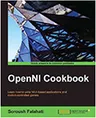 OpenNI CookbookPackt, 2013. Basic and advanced use of OpenNI 2 and NiTE 2.
Before payments I spent years in C++ and C# on depth cameras and computer vision. The open-source tools from that time were downloaded tens of thousands of times, and one article won a CodeProject prize.
Old posts and project pages are in the archive.